 DriveBuddy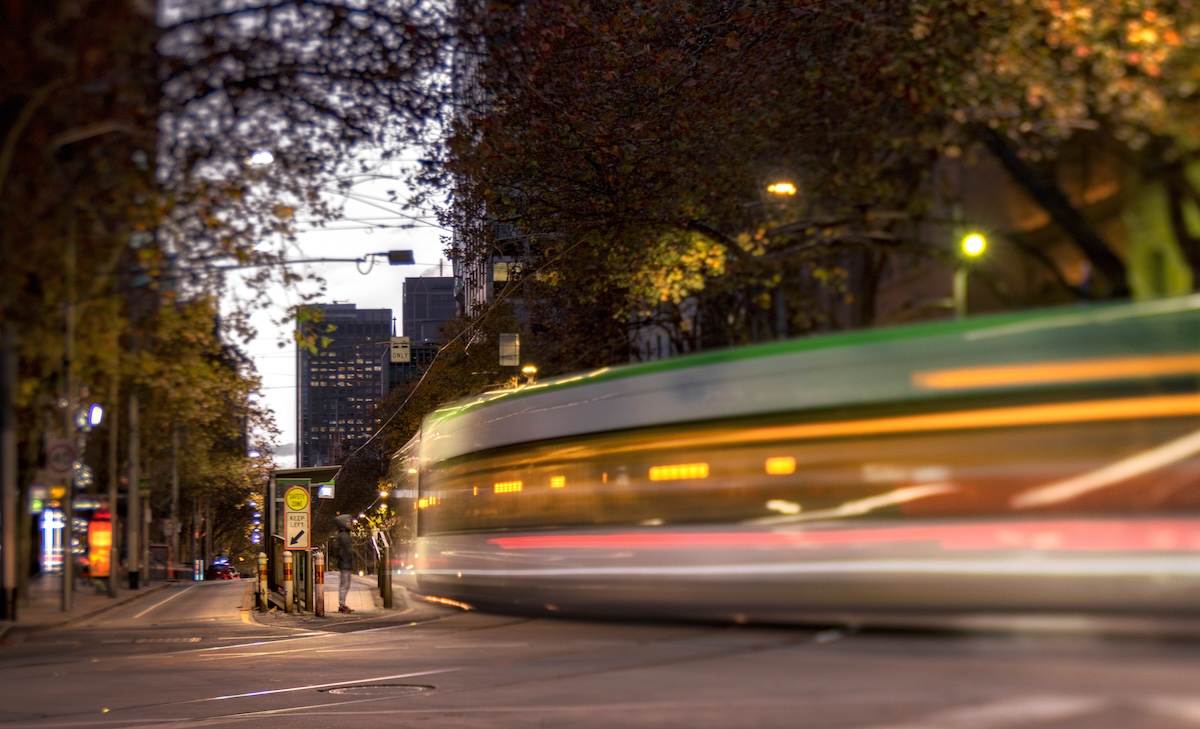
If you're about to book your VicRoads drive test in Melbourne, the test centre you choose can genuinely change your odds of passing. That's not an opinion — it's a pattern every experienced driving instructor in Melbourne will confirm, and it's something most learner drivers only find out after they've failed.
This guide pulls together what instructors around Melbourne have been telling their students for years, plus the official VicRoads rules, so you can walk into your test knowing exactly what you're up against.
Which Melbourne test centre suits you?
Answer 4 quick questions and we'll recommend the best centre for your situation.
First, the basics you need to have sorted
Before you can book a VicRoads drive test, you need to:
- Be at least 18 years old
- Have held your learner permit continuously for 12 months if you're under 21 (6 months if you're 21–24, 3 months if you're 25+)
- Have completed 120 hours of supervised driving, including at least 20 hours at night, if you're under 21
- Have passed the Hazard Perception Test
- Have your paper learner logbook complete and signed, or your myLearners app submission ready
The 120-hour requirement in Victoria is one of the highest in Australia — Queensland requires 100, South Australia 75, and WA 50 on its logbook system. Victoria takes learner preparation seriously, and the pass rates reflect that.
The thing most learners miss: Unlike NSW, QLD, ACT and Tasmania, professional driving lessons in Victoria do NOT count as bonus logbook hours. A one-hour lesson with an instructor counts as one hour in your logbook. There's no 3-for-1 scheme here. So if you're under 21, you need the full 120 hours regardless of how many lessons you take.
If you don't have easy access to a supervising driver or a car to practise in, the TAC L2P program can connect eligible young learners with volunteer mentors and vehicles — worth checking if the 120 hours feels out of reach.
One more thing that trips people up: your supervising driver must hold a full (non-probationary) licence and must have a Blood Alcohol Concentration under 0.05 while supervising you. If the person supervising you is a paid driving instructor, their BAC must be zero — different rule.
Why the test centre matters more than most people realise
Victoria has a reputation for relatively strong pass rates compared to other states, but within Melbourne, the difficulty at different VicRoads customer service centres varies significantly. Not because the examiners are stricter or more lenient — they're trained to the same standard — but because the roads around each test centre present different challenges.
A test route through inner-city Carlton will force you to deal with things that simply don't exist on the quieter residential streets around Frankston. A Dandenong route will throw traffic density and merging complexity at you in a way Werribee won't.
Ask any Melbourne driving instructor and they'll give you a rough hierarchy of difficulty that looks something like this:
- Easier: Frankston, Geelong, Werribee, Melton
- Moderate: Bundoora, Deer Park
- Harder: Carlton, Dandenong
That's not an official ranking, and VicRoads doesn't publish centre-by-centre pass rates. But it matches what instructors consistently tell their students, and it matches the driving environment around each centre. If you're borderline ready for your test, the centre you pick could be the difference between passing and paying another $73 for a rebook.
What actually makes each Melbourne test centre hard (or easy)
Carlton — hook turns, trams, and tight streets
Carlton is where the most experienced learners get caught out. The test centre sits right inside Melbourne's hook turn zone — those "Right Turn from Left Only" intersections where drivers must turn right from the leftmost lane, not the right. Many learners rarely encounter hook turns outside the CBD and then meet one for the first time on test day. Victoria added three new hook turn intersections on Grattan Street in Carlton in 2024 — and Grattan Street runs right past the test centre's catchment. Know where they are.
The other tram-related trap: when a tram stops and opens its doors for passengers, you must stop behind it and wait. You can only pass at 10 km/h after the doors close. Fail to stop behind a stationary tram with its doors open and you've likely failed on the spot — and Melbourne inner-city routes expose you to this every few minutes.
Other Carlton-specific challenges:
- 40 km/h school and pedestrian zones mixed with 60 km/h roads — you need to recognise the zone change before the sign arrives
- Heavy pedestrian traffic requiring genuine give-way behaviour, not token slowdowns
- Bike lanes everywhere, which means cyclist head checks on nearly every turn
- Narrow streets in the Carlton and Parkville residential pockets with tight turning circles
If you're confident with hook turns and comfortable around stopped trams, Carlton is manageable. If you aren't, it's an avoidable trap — book a centre without trams.
Bundoora — the right-turn killer
Bundoora's reputation among instructors is that it's moderate difficulty, but with one very specific failure pattern: failing to give way when turning right. Bundoora examiners pay close attention to right turns at intersections without traffic lights, where you must yield to all oncoming traffic before committing.
The upside of Bundoora is that the University Hill business park near the centre has wide, clear roads. If you can nail right turns and keep your head checks crisp, it's one of the more forgiving inner-north options.
Deer Park — speed zone whiplash
Deer Park in Melbourne's west is known for catching learners out with speed-zone transitions. The routes around Deer Park include sharp transitions between 80 km/h, 70 km/h and 60 km/h zones, often within a short stretch of road.
If you're not the kind of driver who adjusts speed the moment you see a new sign (and not a moment earlier), Deer Park will find you out. Heavy truck traffic in the surrounding industrial area during business hours also means early morning or mid-afternoon bookings are smart.
Frankston — probably the easiest Melbourne centre
Frankston has a reputation among Melbourne driving instructors as one of the more forgiving test centres. Not because examiners are lenient — they aren't — but because the test routes are primarily suburban residential streets with predictable intersections, light traffic outside peak hours, and no trams, no tram tracks, and very few complex multi-lane scenarios.
If you live in Melbourne's south-east and you're genuinely prepared, Frankston is worth considering.
Dandenong — widely considered the hardest Melbourne centre
Dandenong has a reputation among instructors as one of the toughest Melbourne centres, and the reason is traffic density and unpredictability. The high-volume commercial zones around Dandenong mean you'll deal with more lane changes, more merging, and more unpredictable pedestrian behaviour than almost anywhere else in the Melbourne metro area.
Dandenong isn't impossible — thousands of people pass it every year — but if you're borderline on your preparation, this is the centre where you're most likely to come unstuck.
The VicRoads critical errors and immediate terminations you need to know cold
VicRoads uses a two-tier error system. You need to know this inside out before test day.
Immediate Termination Errors (one = instant fail):
- Intervention (examiner or supervising instructor having to physically or verbally assist you)
- Disobeying a lawful direction from the examiner
- Collision (hitting a kerb hard, another vehicle, or any object)
- Failing to give way (forcing another road user or pedestrian to take evasive action)
- Excessive speed (over the limit)
- Stopping in a dangerous position
- Failing to stop at a red light, stop sign, or railway crossing
- Other dangerous actions
Critical Errors (you're allowed 1 in Stage 1, and 2 in total):
- Driving too slowly without reason
- Failing to look (missing a mirror check or head check)
- Failing to signal
- Blocking a pedestrian crossing
- Mounting a kerb
- Stalling
- Incomplete stop (rolling through a stop sign)
- Other illegal actions not covered above
Two critical errors in Stage 1 alone ends the test — the rule isn't simply "two strikes overall," it's "no more than one in Stage 1, no more than two across the whole test."
According to RACV reporting of VicRoads figures from 2022, about three-quarters of Victorian drive test failures came from immediate termination errors, with critical errors accounting for most of the rest. Between them, the two lists above are responsible for the overwhelming majority of test failures in Victoria. Know them cold.
The mirror-signal-headcheck sequence examiners actually want to see
Here's something good instructors drill into students that almost never appears in online guides: VicRoads examiners are trained to look for a specific observation sequence before any lane change, merge, or pull-away from the kerb. They want to see:
- Interior (centre) mirror — to confirm nothing is closing in behind you
- Exterior mirror on the side you're moving toward
- Head check over the shoulder on the side you're moving toward
- Signal
- Execute the manoeuvre
A lot of failures happen because learners do the steps in the wrong order, skip the head check and only do mirrors, or turn their head so quickly they aren't actually seeing anything. Examiners can tell the difference between a performative head check and a real one. Don't fake it — your eyes need to actually move.
The pre-drive check that causes avoidable fails
Before the examiner even gets in the car, they walk around it. If your vehicle is unroadworthy, the test is over before it starts. Check all of these the morning of your test:
- All indicators working (front, rear, side)
- Brake lights working (have someone stand behind while you press the pedal)
- Headlights — both low and high beam
- Windscreen wipers and washer fluid topped up
- Tyre tread above the legal minimum — if the tread wear indicators are flush with the tyre surface, the tyres need replacing before your test
- Horn working
- Seatbelts for all seats functioning
- No warning lights on the dashboard
- The entire speedometer visible from the passenger seat
That last one catches people out. If your car's dash is angled in a way that blocks the examiner's view of the speedo, the test can be cancelled on the spot.
The morning-of-test checklist
- Eat a real breakfast. Not a can of Red Bull.
- Do a short familiarisation drive in the area if possible — 10 to 15 minutes to get your eyes working and your head up
- Bring your learner permit card, your complete logbook or myLearners submission, and any glasses you need
- Arrive at least 15 minutes early
- Go to the bathroom before you meet the examiner (seriously)
- Turn your phone off and put it in the glovebox
- Walk through the pre-drive check out loud with your supervising driver
When you finish, VicRoads gives you a result slip showing either "Successful" or "Unsuccessful," with any recorded errors noted. Victoria doesn't score the test as a percentage — it's pass or fail, with the specific errors listed so you know what to work on.
Forget about learning the test route
This is the single most common mistake nervous learners make, so I'll say it plainly: don't try to memorise test routes. VicRoads uses multiple routes at each centre and rotates them. They're also adjusted when road conditions change. Examiners can easily tell when a learner is driving from memory versus responding to the road in real time — and they actively punish it.
Instead, use the week before your test to:
- Do 3–4 practice drives in the test centre's suburbs. You're not learning the route — you're learning the road environment. Frankston's streets feel different from Carlton's streets.
- Practise the full pre-drive check with your supervising driver playing the examiner. Do it aloud.
- Drive at the same time of day your test is booked. Morning traffic is very different from 2pm traffic.
- Do at least one drive in the wet if you've been blessed with a dry week. Rain changes everything about stopping distances and visibility.
- Check your logbook is complete and signed. VicRoads will deduct incomplete entries from your total. If you present at the centre with hours under 120 after deductions, you're turned away and you lose your fees.
Book an instructor who actually works your test centre's suburbs
Not all Melbourne instructors know every Melbourne test centre equally well. An instructor who teaches five lessons a week around Frankston knows those roads cold. An instructor who mostly works Dandenong knows exactly which intersections catch people out there. When you're picking an instructor on DriveBuddy, filter by the suburbs around your chosen test centre — and if you're borderline ready, book at least one mock test with them before your real one.
If you're in Victoria and looking for a driving instructor, browse Melbourne instructors on DriveBuddy.
Sources
- Transport Victoria — Prepare for your probationary licence
- VicRoads (vicroads.vic.gov.au) — Driving on your Ls
- mylearners.vic.gov.au — Stage guides and learner permit requirements
- VicRoads Drive Test Criteria for Driving Instructors (PDF)
- Transport Victoria — Hook turns
- RACV — Drivers licence fail data reporting and tram road rules